📞Customer Service: +86 13248368268 📧servicecenter@suzhoufrank.com one year replacement and warranty!

Can Endoscopy Detect Cancer?
Can endoscopy detect cancer? Yes , through direct visualization and biopsy. Learn how it works , what it can find and why tissue sampling confirms diagnosis.
ENDOSCOPY
Dr Qi Rui
1/7/20266 min read
When a doctor orders an endoscopy suddenly the mind races to the worst possibility. Can endoscopy detect cancer? Will this procedure give a definitive answer?
The short answer: yes , endoscopy can detect cancer. But the complete answer involves understanding what "detect" actually means , how the process works and why endoscopy alone doesn't always provide the final word. This guide explains what endoscopy can reveal , its limitations and why doctors often combine it with biopsies and other tests to reach accurate diagnoses.
How Endoscopy Finds Suspicious Areas
Endoscopy provides direct visualization of internal surfaces that other tests cannot match. While CT scans and X-rays show shadows and outlines , endoscopy shows actual tissue in real time. The physician sees color , texture , contour and abnormalities as they actually appear.
For patients unfamiliar with the procedure , understanding what endoscopy involves provides essential background before exploring its cancer detection capabilities.
During the examination , the endoscopist looks for visual abnormalities that might indicate cancer or precancerous changes:
Masses and Growths
Tumors often appear as raised masses , irregular growths or areas where normal tissue architecture is disrupted. Some cancers create obvious protrusions into the digestive tract lumen.
Ulcerations
Cancerous ulcers often look different from benign ones. Irregular borders , raised edges , unusual coloring and failure to heal suggest malignancy. Experienced endoscopists recognize patterns that raise suspicion.
Mucosal Changes
Early cancers may cause subtle surface changes: unusual redness , pale patches , thickened areas or altered texture. These changes might be invisible on imaging studies but visible during direct inspection.
Strictures and Narrowing
Cancers can cause narrowing of the digestive tract. The nature of that narrowing , its appearance and associated tissue changes help determine whether malignancy might be responsible.
The National Cancer Institute recognizes upper endoscopy as a valuable tool for detecting gastric abnormalities , including early-stage cancers that might otherwise go undiagnosed until symptoms become severe.
The Critical Role of Equipment Quality
What the physician can see depends heavily on what the equipment can show. Cancer detection relies on visualization quality that reveals subtle abnormalities rather than missing them.
Modern endoscopy systems incorporate high-resolution cameras that capture fine tissue details. Quality medical endoscope cameras provide the image clarity that allows endoscopists to distinguish suspicious lesions from normal tissue variants. Resolution matters because early cancers often present as subtle changes easily missed with inferior optics.
Illumination plays an equally important role. The digestive tract is naturally dark. Everything the physician sees depends on light delivered through the endoscope. Quality LED light sources provide consistent , bright illumination that reveals mucosal details , vascular patterns and color variations that might indicate pathology. Poor lighting can hide what excellent lighting reveals.
This is why facilities investing in quality visualization equipment contribute to cancer detection rates. The endoscopist's skill matters enormously , but even expert eyes can only evaluate what the equipment shows them.
Why Biopsy Matters: Seeing vs. Diagnosing
Here's where the answer to "can endoscopy detect cancer" becomes nuanced. Endoscopy can identify suspicious areas. But identifying something that looks concerning isn't the same as diagnosing cancer.
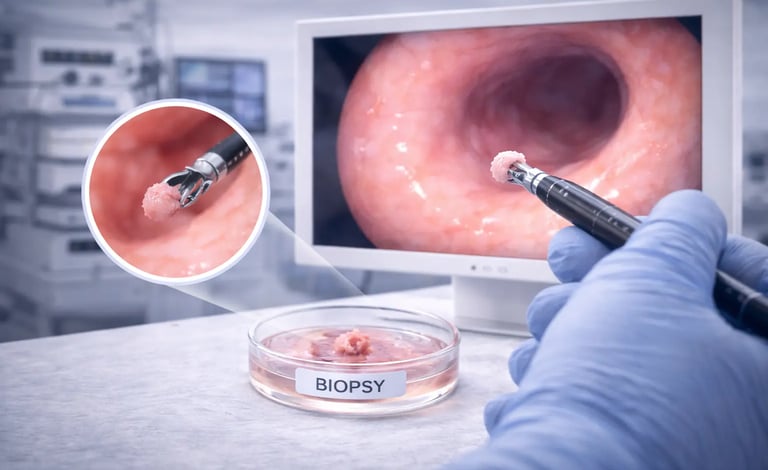
Cancer diagnosis requires pathological confirmation. Cells must be examined under a microscope by a pathologist who evaluates their characteristics at the cellular level. Visual appearance during endoscopy raises suspicion. Biopsy provides proof.
During endoscopy , the physician can take tissue samples from any suspicious areas. Small instruments passed through the endoscope remove tiny pieces of tissue for laboratory analysis. This biopsy process is typically painless because the digestive tract lining lacks pain-sensing nerves.
The biopsy tissue undergoes processing and microscopic examination. Pathologists look for cellular abnormalities that define cancer: abnormal cell shapes , disorganized growth patterns , invasion beyond normal boundaries. Only this microscopic evaluation can definitively confirm or rule out malignancy.
This is why endoscopy reports often say "suspicious for malignancy" or "biopsy pending" rather than declaring cancer found. The visual assessment indicates concern. The pathology report provides the answer.
What Types of Cancer Can Endoscopy Detect?
Different endoscopic procedures access different parts of the body. Each can detect cancers in its respective region.
Esophageal Cancer
Upper endoscopy directly visualizes the esophagus. Cancers appear as masses , ulcerations or strictures. Barrett's esophagus , a precancerous condition , shows distinctive color changes that surveillance endoscopy monitors over time.
Stomach (Gastric) Cancer
The same upper endoscopy that examines the esophagus continues into the stomach. Gastric cancers may appear as ulcerated masses , thickened folds or diffuse wall changes. Endoscopy can detect early gastric cancer when it's still curable.
Colorectal Cancer
Colonoscopy examines the entire colon and rectum. Colorectal cancers often develop from polyps , which endoscopy can both detect and remove. Finding and removing polyps prevents cancer from developing in the first place.
According to Cancer Research UK , colonoscopy is considered the gold standard for detecting bowel cancer and precancerous polyps , with the ability to both diagnose and often treat during the same procedure.
Duodenal and Small Bowel Cancer
Upper endoscopy reaches the duodenum. Specialized procedures like capsule endoscopy and deep enteroscopy can examine portions of the small bowel that standard endoscopy cannot reach.
Other Cancers
Bronchoscopy examines airways for lung cancer. Cystoscopy examines the bladder for bladder cancer. The principle remains consistent: direct visualization plus biopsy enables detection and diagnosis.
Limitations: What Endoscopy Might Miss
Can endoscopy detect cancer? Yes , but not always. Understanding limitations provides realistic expectations.
Location Limitations
Endoscopy only sees surfaces it can reach. Cancers in areas the scope cannot access , or cancers growing beneath the surface rather than into the lumen , may not be visible.
Size and Stage
Very early or very small cancers may appear identical to normal tissue. Some cancers grow in ways that don't produce obvious surface abnormalities until more advanced stages.
Preparation Quality
Poor bowel preparation for colonoscopy leaves residue that obscures visualization. Cancers hidden behind retained stool can be missed. Preparation quality directly affects detection rates.
Operator Experience
Endoscopy is operator-dependent. Detection rates vary between practitioners. More experienced endoscopists with higher procedure volumes generally achieve better detection rates.
Interval Cancers
Some cancers develop between screening examinations. A normal colonoscopy doesn't guarantee no cancer will develop before the next scheduled screening.
Submucosal Tumors
Cancers growing beneath the surface layer may create only subtle bulging without visible mucosal abnormality. These can be challenging to detect during standard endoscopy.
Advanced Techniques That Improve Detection
Technology continues improving cancer detection during endoscopy.
Chromoendoscopy
Dyes or stains applied during the procedure highlight abnormal areas that might otherwise blend with normal tissue. Color contrast makes suspicious lesions more visible.
Narrow Band Imaging (NBI)
Special light wavelengths enhance visualization of mucosal surface patterns and blood vessel architecture. Cancers often show distinctive vascular patterns that NBI reveals more clearly than standard white light.
Magnification Endoscopy
Optical zoom capabilities allow detailed examination of suspicious areas at high magnification , revealing cellular patterns that indicate whether tissue appears benign or malignant.
Confocal Laser Endomicroscopy
This technology provides real-time microscopic imaging during endoscopy , potentially allowing immediate assessment of whether tissue appears cancerous without waiting for traditional biopsy results.
Artificial Intelligence
AI-assisted systems can analyze endoscopic images in real time , flagging areas that might warrant closer attention or biopsy. These systems don't replace physician judgment but provide additional vigilance.
When Doctors Combine Endoscopy With Other Tests
Endoscopy rarely works in isolation. Comprehensive cancer evaluation often combines multiple approaches.
Imaging Studies
CT scans , MRI and PET scans assess areas endoscopy cannot reach and evaluate whether cancer has spread beyond the primary site. Staging determines treatment options.
Endoscopic Ultrasound (EUS)
This specialized procedure combines endoscopy with ultrasound imaging. EUS can assess tumor depth , lymph node involvement and structures outside the digestive tract wall that standard endoscopy cannot evaluate.
Blood Tests
Tumor markers and other blood tests may support diagnosis or monitoring. They don't replace endoscopy but provide complementary information.
Genetic Testing
Some cancers benefit from genetic analysis of biopsy tissue. Molecular characteristics may influence treatment selection and prognosis.
The combination of visual assessment , tissue sampling , imaging and laboratory analysis provides comprehensive evaluation that no single test could achieve alone.
Screening vs. Diagnostic Endoscopy
Context matters when asking whether endoscopy can detect cancer.
Screening Endoscopy
Screening examines people without symptoms to find cancer early or detect precancerous changes. Colonoscopy screening has dramatically reduced colorectal cancer deaths by finding polyps before they become malignant.
Screening catches cancers at earlier , more treatable stages. The goal is detection before symptoms develop.
Diagnostic Endoscopy
Diagnostic procedures evaluate specific symptoms: bleeding , difficulty swallowing , unexplained weight loss , persistent pain. These patients already have concerning signs that warrant investigation.
Diagnostic endoscopy answers specific clinical questions. Can endoscopy detect cancer in someone with worrisome symptoms? Often yes , and frequently at stages where treatment remains possible.
What Happens When Cancer Is Found
If endoscopy and biopsy confirm cancer , the finding triggers a comprehensive evaluation and treatment planning process.
Staging determines cancer extent. Additional imaging , sometimes surgical exploration , establishes whether disease remains localized or has spread.
Multidisciplinary teams including gastroenterologists , surgeons , oncologists and other specialists develop treatment plans. Options may include surgical removal , chemotherapy , radiation , targeted therapies or combinations.
Early detection generally means better outcomes. Cancers found before spreading have higher cure rates. This reality drives screening recommendations and prompt evaluation of concerning symptoms.
The Answer in Perspective
Can endoscopy detect cancer? Yes. The procedure provides direct visualization of internal surfaces where cancers develop. Suspicious findings can be biopsied for definitive diagnosis. When performed with quality equipment by experienced practitioners , endoscopy is a powerful cancer detection tool.
But endoscopy works best as part of comprehensive evaluation. Visual findings require pathological confirmation. Staging requires imaging. Treatment requires multidisciplinary planning.
The question isn't really whether endoscopy can detect cancer. It's whether endoscopy should be part of your evaluation. For screening purposes or investigation of symptoms , the answer is usually yes. The procedure finds cancers that other tests miss , enables tissue diagnosis and guides treatment decisions.
Conclusion
Endoscopy can detect cancer by directly visualizing suspicious areas and obtaining tissue for pathological diagnosis. Its power lies in seeing actual tissue rather than shadows on imaging studies. When combined with biopsy , endoscopy moves from suspicion to diagnosis.
Limitations exist. Not every cancer is visible. Not every visible abnormality is cancer. But within appropriate applications and combined with other tests when needed , endoscopy remains one of medicine's most valuable tools for finding cancers early enough to treat them effectively.
© 2025. All rights reserved.
About Us
Introduction
Development
Cooperation
Service
Main Products
Medical Grade Monitor
No 15, Jinyang road KunshanSuzhou, Jiangsu, China