📞Customer Service: +86 13248368268 📧servicecenter@suzhoufrank.com one year replacement and warranty!

Endoscopy Technology: The Basics of How It Works
Endoscopy technology explained for medical professionals. Covers camera sensors , light sources , display systems , portable units and equipment selection.
ENDOSCOPY
Dr Qi Rui
12/22/20258 min read
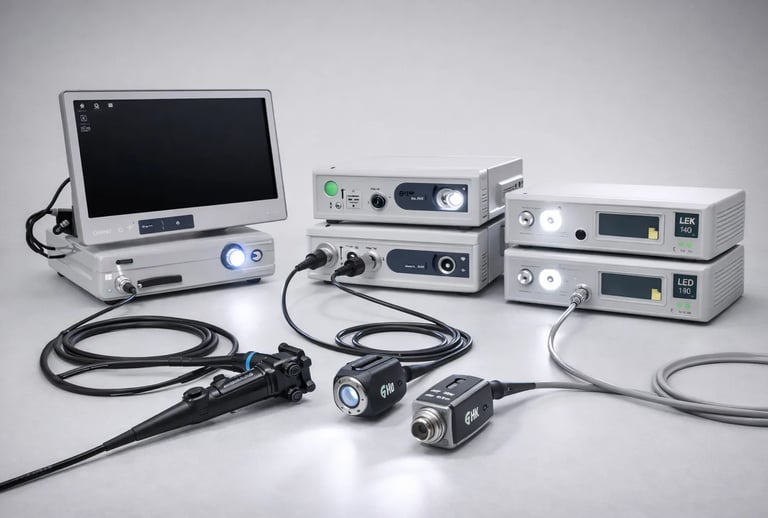
Endoscopy technology has transformed diagnostic and therapeutic medicine over the past several decades. What started as rigid metal tubes with limited visibility has evolved into sophisticated imaging systems delivering real-time , high-definition visualization of internal anatomy. For healthcare professionals , understanding the technology behind modern endoscopy helps inform equipment decisions , optimize procedural outcomes and appreciate ongoing innovations in the field.
This article breaks down the fundamental components of endoscopy technology , explains how each element contributes to image quality and clinical utility , and examines how advances like HD and 4K imaging have changed real-world practice.
The Core Components of Endoscopy Technology
At its most basic level , endoscopy technology consists of three essential elements: a camera to capture images , a light source to illuminate internal structures and a display system to present the visual information. Understanding what endoscopy involves from a technical standpoint reveals how these components work together to create diagnostic capability.
Every modern endoscopy system integrates these elements , though the sophistication varies significantly across equipment tiers. Entry-level systems provide adequate visualization for basic procedures. Advanced systems offer enhanced resolution , superior color accuracy and specialized imaging modes that detect subtle pathology invisible to standard equipment.
The interplay between these components determines overall image quality. A high-resolution camera paired with inadequate lighting produces suboptimal images. Excellent illumination combined with a low-quality sensor wastes the light source's potential. Balanced systems match component capabilities to deliver consistent , clinically useful visualization.
Camera Technology: The Heart of Modern Endoscopy
The camera represents the most critical component in endoscopy technology. Image sensors capture light reflected from tissue surfaces and convert it into electronic signals for display. Two primary sensor types dominate the market: CCD (charge-coupled device) and CMOS (complementary metal-oxide semiconductor).
CCD sensors have long been the standard in medical imaging. They produce high-quality images with excellent color reproduction and low noise. CCD technology handles varying light conditions well , maintaining image stability across different tissue types and anatomical locations. Many established endoscopy systems still rely on CCD sensors for their proven reliability.
CMOS sensors have gained ground rapidly in recent years. Originally considered inferior for medical applications , CMOS technology has improved dramatically. Modern CMOS sensors offer comparable or superior image quality to CCD , with advantages in power consumption , heat generation and manufacturing cost. Many newer endoscopy systems now incorporate CMOS sensors.
Resolution matters significantly in endoscopy technology. Standard definition (SD) systems output approximately 480 lines of resolution. High definition (HD) systems deliver 720p or 1080p resolution , representing a substantial improvement in detail visibility. The jump to 4K (ultra-high definition) pushes resolution to approximately 3840 x 2160 pixels , capturing fine mucosal details , subtle vascular patterns and early-stage lesions with unprecedented clarity.
For facilities evaluating camera systems , options range from HD medical endoscope cameras with integrated cold light sources suitable for general diagnostic work to ultra HD 4K medical endoscope cameras that maximize detection capability for specialized applications. The choice depends on clinical priorities , procedure types and budget considerations.
Light Source Technology: Illuminating the Field
Without adequate illumination , even the best camera produces unusable images. Light source technology has evolved considerably , moving from halogen and xenon bulbs toward LED-based systems that offer significant advantages.
Halogen light sources represent older technology still found in some facilities. They produce acceptable illumination but generate substantial heat , have shorter bulb life and consume more power than modern alternatives. Replacement bulbs add ongoing costs.
Xenon light sources became the standard in high-end endoscopy for years. Xenon produces bright , white light with excellent color rendering. The illumination quality supports accurate tissue assessment. However , xenon bulbs are expensive , have limited lifespan (typically 500 to 1000 hours) and generate significant heat requiring active cooling systems.
LED light sources now dominate modern endoscopy technology. LED offers multiple advantages: longer lifespan (often 30,000+ hours) , lower heat generation , reduced power consumption , instant-on capability and more consistent light output over time. LED systems don't require warm-up periods and maintain stable color temperature throughout procedures.
Light intensity matters for clinical utility. Adequate illumination must reach distant anatomical structures while avoiding overexposure of proximal tissues. Modern light sources offer adjustable intensity , allowing operators to optimize illumination for specific situations.
Facilities building or upgrading endoscopy capabilities can select from various LED light source options. Higher-powered units like 140W LED cold light sources deliver maximum illumination for procedures requiring bright , consistent lighting in larger cavities. 120W LED cold light sources provide excellent performance for standard diagnostic and therapeutic applications while balancing power consumption and output.
The term "cold light" refers to fiber-optic light transmission that delivers illumination without transferring heat to the distal tip. This protects tissue from thermal injury and improves patient safety , a critical consideration in endoscopy technology design.
Display Systems: Presenting Visual Information
The display component of endoscopy technology presents captured images for physician interpretation. Monitor quality , size , resolution and color accuracy all affect diagnostic utility.
Resolution matching between camera and display systems matters. A 4K camera feeding a standard HD monitor wastes capture capability. Conversely , a 4K monitor displaying SD camera output can't create detail that doesn't exist. Matched systems optimize the investment in imaging technology.
Monitor size affects practical utility. Larger displays allow multiple team members to view procedures simultaneously and help physicians identify subtle findings. However , physical space constraints in procedure rooms may limit display size options.
Color accuracy supports diagnostic interpretation. Subtle mucosal color variations can indicate pathology. Displays with poor color rendering may obscure these differences. Medical-grade monitors are calibrated for accurate color reproduction , though they cost more than consumer displays.
Image processing occurs between capture and display. Modern endoscopy technology incorporates processing algorithms that enhance edges , adjust brightness dynamically , reduce noise and optimize contrast. These enhancements happen in real time without noticeable delay. Some systems offer selectable processing modes for different clinical situations.
The Evolution from SD to HD to 4K
Understanding how endoscopy technology has evolved helps contextualize current equipment decisions. Each resolution generation has brought measurable improvements in clinical capability.
Standard definition endoscopy served medicine for decades. Adequate for identifying gross pathology , SD systems struggle with subtle findings. Fine vascular patterns , early-stage dysplasia and small flat lesions often escape detection at SD resolution. Many facilities worldwide still operate SD equipment , though this represents aging infrastructure.
High definition endoscopy represented a significant advancement. The jump to HD improved detection rates for various pathologies. Studies demonstrated that HD systems identified more adenomas during colonoscopy compared to SD equipment. For upper endoscopy , HD imaging improved Barrett's surveillance accuracy. The clinical benefit of HD over SD is well established.
4K ultra-high definition represents the current state-of-the-art in endoscopy technology. The resolution increase from HD to 4K is substantial , though perhaps less transformative than the SD-to-HD transition. 4K excels at revealing fine mucosal detail , subtle color variations and vascular patterns. For procedures requiring maximum visual information , 4K imaging provides meaningful advantages.
The 4K fluorescence medical endoscope camera represents advanced endoscopy technology combining ultra-high resolution with specialized fluorescence imaging capability. Fluorescence imaging uses specific light wavelengths to highlight tissue characteristics not visible under standard white light illumination , adding another diagnostic dimension beyond resolution improvements.
According to the American Society for Gastrointestinal Endoscopy , continued advancement in imaging technologies has meaningfully improved detection and characterization of GI lesions. The organization recognizes high-definition imaging as a standard of care for many endoscopic procedures.
Portable and Mobile Endoscopy Technology
Traditional endoscopy technology required dedicated procedure rooms with fixed equipment installations. Modern advances have enabled portable systems that expand where endoscopy can occur.
Portable endoscopy units integrate camera , light source and display into compact , mobile configurations. These systems serve multiple clinical needs: smaller facilities without dedicated endoscopy suites , bedside procedures for patients who can't be transported , multi-room flexibility in ambulatory surgery centers and point-of-care applications in remote or resource-limited settings.
Portability doesn't require sacrificing image quality. Modern portable systems deliver diagnostic-quality visualization matching fixed installations. Options range from compact HD portable endoscope camera units suitable for basic diagnostic applications to full HD portable systems with larger displays providing enhanced viewing for therapeutic procedures. Specialized configurations like gastrointestinal portable endoscope units address specific clinical applications with optimized features.
For facilities evaluating equipment options , portable systems offer flexibility that fixed installations can't match. The ability to move endoscopy capability between locations , support multiple procedure rooms with single equipment investments or provide bedside services adds operational value beyond the technology's imaging performance.
Specialized Imaging Modes in Modern Endoscopy Tech
Beyond standard white light imaging , modern endoscopy technology incorporates specialized modes that enhance diagnostic capability for specific applications.
Narrow-band imaging (NBI) uses filtered light wavelengths to enhance visualization of mucosal surface patterns and vascular architecture. Blue and green light penetrate tissue to different depths , highlighting features not visible under white light. NBI aids in characterizing lesions , predicting histology and guiding biopsy decisions.
Chromoendoscopy involves applying dyes or contrast agents to mucosal surfaces. While technically a technique rather than a technology , modern equipment optimizes visualization of chromoendoscopy findings. The combination of high-resolution imaging and enhanced contrast improves subtle lesion detection.
Fluorescence imaging uses specific excitation wavelengths to cause certain tissues or administered agents to emit light. This creates contrast between normal and abnormal tissue based on metabolic or structural differences. Fluorescence-capable systems require specialized light sources and sensors tuned to relevant wavelengths.
Magnification endoscopy provides optical zoom capability , allowing detailed examination of suspicious areas. Combined with NBI or chromoendoscopy , magnification enables in-vivo histological assessment that can guide immediate clinical decisions.
These specialized modes add diagnostic dimensions beyond what resolution improvements alone provide. Facilities investing in advanced endoscopy technology should consider which imaging modes align with their clinical programs and patient populations.
Endoscope Instruments and Accessories
Endoscopy technology extends beyond imaging to include the instruments that pass through scope working channels for diagnosis and therapy.
Biopsy forceps obtain tissue samples for histological analysis. Design variations optimize grasping , sample size and tissue preservation. Reusable and single-use options exist with different cost and processing implications.
Polypectomy snares remove polyps during colonoscopy and occasionally upper endoscopy. Snare designs vary by size , shape and wire characteristics to address different polyp types and locations.
Hemostasis devices control bleeding through various mechanisms: injection catheters delivering epinephrine or sclerosants , thermal probes applying heat coagulation , clips providing mechanical compression and newer devices combining modalities.
Dilation devices treat strictures by expanding narrowed lumens. Bougie dilators , balloon dilators and other designs address different stricture types and locations.
The full range of endoscope instruments available to facilities continues expanding as therapeutic endoscopy capabilities grow. Instrument quality affects procedural success , and compatibility with existing equipment requires verification when evaluating options.
Documentation and Integration
Modern endoscopy technology generates substantial visual data requiring effective documentation systems.
Image capture during procedures creates a visual record supporting clinical decision-making , communication with referring physicians and longitudinal comparison at follow-up examinations. High-resolution systems produce correspondingly larger image files , requiring adequate storage infrastructure.
Video recording provides complete procedural documentation. Some facilities record all procedures. Others record selectively for teaching , quality assurance or complex cases. Storage requirements for video archives are substantial.
Report integration connects endoscopy findings with broader electronic health records. Standardized reporting templates , image embedding and structured data entry facilitate information flow across care teams.
Network connectivity in modern endoscopy technology enables remote viewing , telemedicine consultation and centralized quality monitoring. Connected systems support collaborative care models , though they require appropriate security measures.
Evaluating Endoscopy Technology for Your Facility
Selecting endoscopy technology involves balancing clinical requirements , budget constraints and operational considerations.
Clinical priorities should drive decisions. Facilities focusing on screening colonoscopy have different needs than those performing advanced therapeutic ERCP. Matching technology to procedure mix optimizes value.
Total cost of ownership extends beyond purchase price. Maintenance contracts , consumables , bulb replacement (for non-LED systems) , training and potential upgrades all contribute to long-term costs. LED light sources with their extended lifespan offer significant savings over xenon despite potentially higher initial costs.
Compatibility considerations matter when building systems from multiple vendors. Camera , light source and display components must work together. Integrated solutions simplify compatibility but may limit future flexibility.
Service and support availability affects operational reliability. Equipment downtime impacts patient care and revenue. Vendor reputation , service response times and parts availability all warrant evaluation.
According to the World Gastroenterology Organisation , ongoing advances in endoscopy technology continue improving diagnostic and therapeutic capabilities across gastroenterology practice worldwide. Staying current with technology evolution helps facilities make informed equipment decisions.
The Future of Endoscopy Technology
Endoscopy tech continues evolving rapidly. Artificial intelligence integration promises automated lesion detection and characterization. Miniaturization enables new form factors and access routes. Enhanced visualization modes provide ever more diagnostic information.
For healthcare professionals , understanding the fundamentals of current endoscopy technology creates a foundation for evaluating emerging innovations. The core principles of camera , light and display remain relevant even as specific implementations advance.
The technology serves a clear purpose: enabling clinicians to see inside the body safely and clearly. Every component improvement , from higher resolution sensors to brighter LED sources to better displays , ultimately serves that goal. Better visualization means better diagnosis. Better diagnosis means better patient outcomes.
Partner With Suzhou Frank for Your Endoscopy Equipment Needs
Upgrading or expanding endoscopy capabilities requires reliable equipment and a supplier who understands clinical requirements. Suzhou Frank Medical specializes in endoscopy technology solutions , from HD and 4K camera systems to LED light sources , portable units and a full range of endoscope instruments.
Whether outfitting a new facility , replacing aging equipment or adding portable capability to existing infrastructure , our team can help identify the right configuration for your clinical priorities and budget.
Contact us to discuss your endoscopy technology needs or explore our full product catalog to see available options.
© 2025. All rights reserved.
About Us
Introduction
Development
Cooperation
Service
Main Products
Medical Grade Monitor
No 15, Jinyang road KunshanSuzhou, Jiangsu, China