📞Customer Service: +86 13248368268 📧servicecenter@suzhoufrank.com one year replacement and warranty!

How Long Does an Endoscopy Take?
Endoscopy procedures normally take about 10 to 30 minutes, but patients should plan for 2 to 3 hours total, including preparation, sedation recovery, and discharge.
ENDOSCOPY
Dr Qi Rui
12/18/20258 min read
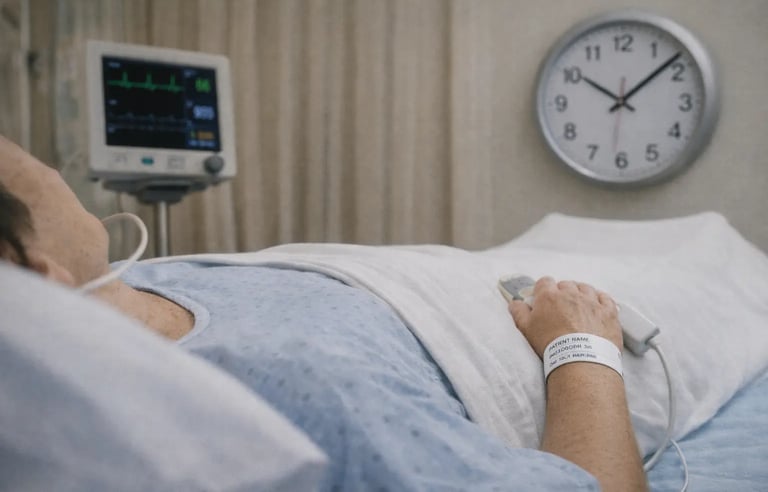
If you've got an endoscopy scheduled, you probably want to know how long you'll be at the facility. Fair question. Nobody wants to block off their entire day if they don't have to.
Here's the short answer. The actual endoscopy procedure takes about 10 to 30 minutes. But you won't be walking in and out that quickly. When you factor in check-in, preparation, sedation setup and recovery time, expect to spend 2 to 3 hours total at the facility.
That said, timing varies. The type of endoscopy matters. Whether you need biopsies matters. How quickly you recover from sedation matters. Let's break it all down so you know exactly what to expect.
If you're unfamiliar with what this procedure involves, our guide on what is endoscopy explains the basics. This article focuses specifically on timing.
The Quick Overview
Before diving into details, here's a general timeline for a typical upper endoscopy:
Check-in and paperwork: 15–30 minutes
Pre-procedure preparation: 20–30 minutes
The actual endoscopy: 10–30 minutes
Recovery from sedation: 30–60 minutes
Discharge process: 10–15 minutes
Total facility time: 2–3 hours
Most people are surprised by how quick the actual procedure is. The scope goes down , the physician examines your digestive tract , and before you know it , the scope comes out. What takes time is everything around the procedure. Especially the sedation recovery.
Pre-Procedure: What Happens Before Getting Started
Your appointment time isn't when the scope goes in. It's when you should arrive at the facility. There's work to do before the procedure begins.
Arrival and Check-In
Plan to arrive 30 to 45 minutes before your scheduled procedure time. Most facilities request this buffer. You'll check in at the front desk , verify insurance information and sign consent forms.
If you haven't completed paperwork ahead of time , that adds a few more minutes. Some facilities allow you to fill out forms online beforehand. Take advantage of this if it's offered. It speeds things up.
Changing and Preparation
After check-in , staff will bring you to a pre-procedure area. You'll change into a hospital gown and store your belongings. A nurse reviews your medical history , confirms your fasting status and asks about allergies and current medications.
This is also when they'll check your vital signs. Blood pressure. Heart rate. Oxygen saturation. Standard protocol.
IV Placement
A nurse places an intravenous line in your arm. This IV delivers fluids and sedation medications during the procedure. If you have difficult veins , this step might take a few extra minutes.
All of this pre-procedure preparation typically runs 20 to 30 minutes. Sometimes longer if the facility is busy or if there are complications with IV access.
The Actual Endoscopy: Faster Than You'd Think
Now for the main event. How long does the endoscopy procedure itself take?
Upper Endoscopy (EGD)
A standard upper endoscopy examining the esophagus , stomach and duodenum takes about 10 to 15 minutes. That's it. The NIDDK confirms that the examination itself is typically brief compared to your total visit time.
During these 10 to 15 minutes , the physician:
Advances the scope through your mouth and throat
Examines the esophageal lining
Inspects the stomach from multiple angles
Visualizes the duodenum
Documents findings with photographs
Withdraws the scope
It moves quickly because physicians perform these procedures routinely. They know exactly what they're looking for and where to look.
Colonoscopy
If you're having a colonoscopy instead of an upper endoscopy , expect a longer procedure time. Colonoscopies typically take 20 to 45 minutes. The colon is longer than the upper GI tract , and the physician needs to navigate through its entire length.
Combined Procedures
Sometimes physicians perform both upper endoscopy and colonoscopy during the same appointment. This is called a bidirectional endoscopy. Combined procedures typically run 45 to 90 minutes total. You only need one round of sedation , which is convenient.
What Can Make the Procedure Take Longer?
Not every endoscopy wraps up in 10 minutes. Several factors can extend the examination time.
Biopsies
If the physician spots something that needs closer examination , they'll take tissue samples. Biopsy collection adds time. Each sample requires positioning the forceps , snipping tissue , retrieving the specimen and placing it in a container.
A few biopsies might add 5 minutes. Multiple biopsies from different locations could add 10 to 15 minutes.
Polyp Removal
During colonoscopy , polyps are often removed on the spot. Small polyps come off quickly with a snare. Larger polyps require more careful technique and take longer to remove safely. Complex polypectomies can add 15 to 30 minutes to the procedure.
Therapeutic Interventions
Endoscopy isn't just diagnostic. Physicians can treat certain conditions during the same procedure:
Cauterizing bleeding vessels
Dilating strictures (narrowed areas)
Placing stents
Removing foreign objects
Injecting medications
Each intervention adds time. A procedure that starts as a simple diagnostic exam might become therapeutic if the physician discovers something that needs immediate treatment.
Difficult Anatomy
Some patients have anatomical variations that make scope navigation trickier. A tortuous colon. A hiatal hernia affecting the gastroesophageal junction. Post-surgical anatomy from previous procedures. These situations require more careful maneuvering and add time.
Poor Bowel Preparation
This applies mainly to colonoscopy. If your bowel preparation wasn't adequate , the physician can't see the mucosal lining clearly. They might need to spend extra time suctioning debris or flushing the colon with water. In some cases , poor prep means the procedure needs to be rescheduled entirely.
Unexpected Findings
Sometimes physicians discover things they didn't anticipate. A suspicious mass requiring multiple biopsies. Active bleeding needing treatment. Extensive inflammation requiring thorough documentation. These findings demand more time and attention.
Sedation: The Reason You Can't Leave Right Away
Here's what most people don't realize. The sedation recovery takes longer than the procedure itself.
Types of Sedation
Most endoscopies use moderate sedation , sometimes called conscious sedation or twilight sedation. Common medications include midazolam (a benzodiazepine) and fentanyl (an opioid). Propofol is also widely used because it works quickly and wears off faster.
You're not fully unconscious with moderate sedation. But you're deeply relaxed and unlikely to remember much afterward.
Why Recovery Takes Time
Even after the procedure ends , sedative medications remain in your system. They impair your:
Judgment
Coordination
Reflexes
Short-term memory
Stanford Health Care notes that patients receiving sedation need someone available to drive them home , as the effects take time to fully wear off. Most facilities require 30 to 60 minutes of monitored recovery.
During this time , nurses check your vital signs periodically. They make sure you're waking up appropriately and not experiencing any adverse reactions. You might feel groggy , slightly confused or unusually sleepy. That's normal.
Factors Affecting Recovery Time
Not everyone recovers from sedation at the same pace. Several factors influence how long you'll need:
Medication dosage - Higher doses take longer to clear
Type of sedation - Propofol clears faster than traditional benzodiazepine/opioid combinations
Age - Older patients often metabolize medications more slowly
Body weight - Affects drug distribution and clearance
Liver function - The liver processes most sedatives
Individual variation - Some people are simply more sensitive to sedation
Most patients feel reasonably alert within 30 to 60 minutes. But the effects linger longer than you might think. That's why you can't drive yourself home.
Discharge: When Can You Actually Leave?
Before you can go home , you need to meet certain criteria.
Discharge Requirements
Staff will confirm that you:
Are awake and oriented
Have stable vital signs
Can walk without significant unsteadiness
Have someone to drive you home
Understand post-procedure instructions
The discharge process itself takes 10 to 15 minutes. A nurse reviews instructions with you , explains what to watch for and answers any questions. Your driver comes back to collect you.
Why You Need a Driver
This requirement is non-negotiable. Sedation impairs your abilities for longer than you feel impaired. Even if you think you're fine , your reflexes and judgment aren't back to normal.
Most facilities won't perform the procedure unless you have confirmed transportation arranged. No exceptions.
Total Time: Putting It All Together
So how long should you actually block off for your endoscopy appointment?
Typical Upper Endoscopy
For a straightforward diagnostic upper endoscopy without complications:
Arrive 30-45 minutes early
Pre-procedure preparation: 20-30 minutes
Procedure: 10-15 minutes
Recovery: 30-60 minutes
Discharge: 10-15 minutes
Total: approximately 2 to 2.5 hours
Colonoscopy
Colonoscopies generally take longer:
Arrive 30-45 minutes early
Pre-procedure preparation: 20-30 minutes
Procedure: 20-45 minutes
Recovery: 30-60 minutes
Discharge: 10-15 minutes
Total: approximately 2.5 to 3 hours
Combined Upper and Lower Endoscopy
When both procedures happen together:
Arrive 30-45 minutes early
Pre-procedure preparation: 20-30 minutes
Procedures: 45-90 minutes
Recovery: 45-60 minutes
Discharge: 10-15 minutes
Total: approximately 3 to 4 hours
Recovery After You Get Home
Your day isn't entirely normal after leaving the facility. Plan accordingly.
The Rest of the Day
Most physicians recommend taking it easy for the remainder of procedure day. Avoid:
Driving (for 24 hours after sedation)
Operating machinery
Making important decisions
Signing legal documents
Consuming alcohol
Taking sedatives or sleep aids unless prescribed
The sedation effects can linger. You might feel more tired than usual. Some people take a nap after getting home. That's perfectly fine.
Eating and Drinking
For upper endoscopy , start with clear liquids and advance to soft foods. Your throat might feel slightly sore from the scope passing through. Warm liquids often help. By the next day , most people eat normally.
For colonoscopy , start with light meals. You might experience some bloating or gas from air pumped into your colon during the exam. Walking around helps move things along.
Common Side Effects
After upper endoscopy , mild throat discomfort is common. After colonoscopy , expect some cramping and bloating. Cedars-Sinai notes that these effects typically resolve within 24 hours. For more details on what to expect afterward , our article on endoscopy side effects covers what's normal and what warrants a call to your doctor.
Returning to Normal Activities
Most people return to work and regular activities the next day. Some feel well enough to resume normal activities the same evening. Listen to your body.
If your procedure involved therapeutic intervention , such as polyp removal , biopsy of suspicious tissue or treatment of bleeding , your physician might recommend additional restrictions. Follow their specific instructions.
When Results Come Back
Timing for results varies depending on what was done during the procedure.
Immediate Findings
Your physician can share what they observed visually right after the procedure. They might tell you whether they saw inflammation , ulcers , polyps or other abnormalities. However , you might not remember this conversation clearly due to lingering sedation effects.
Many physicians schedule a follow-up call or appointment to review findings when you're fully alert.
Biopsy Results
If tissue samples were taken , those go to a pathology lab. A pathologist examines them under a microscope looking for cellular abnormalities. The ASGE indicates that biopsy analysis typically takes 3 to 7 business days. Sometimes longer if specialized testing is needed.
Your physician's office will contact you with biopsy results. Don't worry if you don't hear immediately. Labs need time to process specimens properly.
Tips for a Smoother Visit
A few practical suggestions to help things run efficiently:
Before Your Appointment
Complete paperwork online if offered
Arrange your driver in advance
Follow fasting instructions precisely
Confirm which medications to take or hold
Wear comfortable , loose-fitting clothes
Leave jewelry and valuables at home
Day of Procedure
Arrive on time (early is better)
Bring your ID and insurance card
Have your driver's contact information ready
Ask questions if anything is unclear
Let staff know about any last-minute concerns
After the Procedure
Don't rush the recovery process
Have your driver ready when staff clears you to leave
Take it easy for the rest of the day
Follow all post-procedure instructions
Keep your follow-up appointment
When to Expect a Longer Visit
Certain situations predictably extend your time at the facility:
Therapeutic procedures - Polyp removal , bleeding treatment , dilation
Multiple biopsies - Each sample adds time
Complex anatomy - Previous surgeries , unusual anatomy
Difficult sedation - Some patients need more medication or longer recovery
Facility delays - Emergency cases , scheduling backups
Teaching hospitals - Procedures may involve trainees , adding time for instruction
If your physician anticipates a longer procedure , they'll usually mention this beforehand. Mount Sinai notes that therapeutic endoscopic procedures requiring interventions naturally take longer than purely diagnostic examinations. Ask if you're unsure.
Final Thoughts
So how long does an endoscopy take? The procedure itself runs 10 to 30 minutes for most patients. But plan to spend 2 to 3 hours at the facility when you account for everything else.
The actual examination is quick. The sedation recovery is what takes time. And that recovery period exists for good reason. It keeps you safe.
Block off your morning or afternoon. Arrange your driver. Accept that you won't be fully productive for the rest of procedure day. In exchange , you get valuable diagnostic information about your digestive health. Most patients consider that a worthwhile trade.
© 2025. All rights reserved.
About Us
Introduction
Development
Cooperation
Service
Main Products
Medical Grade Monitor
No 15, Jinyang road KunshanSuzhou, Jiangsu, China