📞Customer Service: +86 13248368268 📧servicecenter@suzhoufrank.com one year replacement and warranty!

Endoscopy vs Colonoscopy: Key Differences
Endoscopy vs colonoscopy explained. Discover what each procedure examines , common reasons doctors order them , preparation differences and what to expect after.
ENDOSCOPY
Dr Qi Rui
12/19/20258 min read
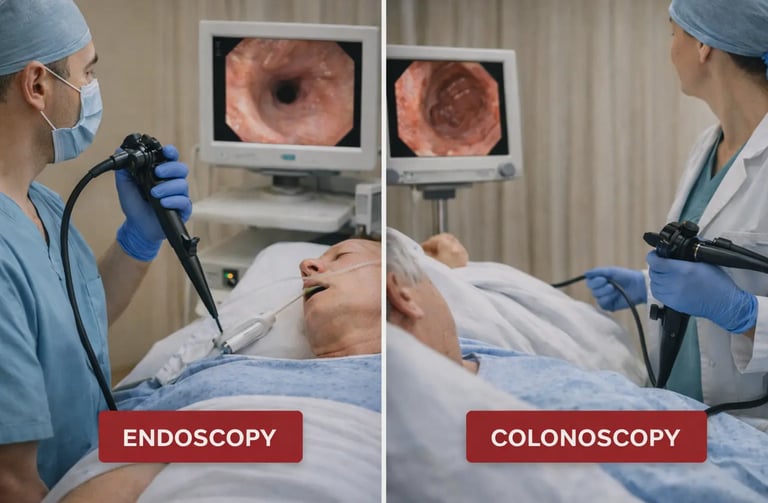
Colonoscopy is actually a type of endoscopy. The term "endoscopy" refers to any procedure that uses a flexible tube with a camera to look inside the body. Colonoscopy is simply the version that examines the colon.
So when people compare endoscopy vs colonoscopy , what they usually mean is the procedure examining the upper digestive tract versus the one examining the lower digestive tract. Same basic technology , different destinations.
That said , understanding the broader category helps make sense of both procedures. Endoscopy as a whole includes dozens of procedure types. Colonoscopy , upper GI endoscopy (EGD) , bronchoscopy , cystoscopy and capsule endoscopy all fall under this umbrella. Each uses similar principles but examines different parts of the body.
This article focuses on the two most common gastrointestinal procedures: standard endoscopy examining the upper GI tract and colonoscopy examining the lower GI tract. These are the procedures most patients encounter , and they're the ones people typically want to compare.
Endoscopy: The Umbrella Term
Endoscopy simply means "looking inside." Any medical procedure that inserts a scope into the body to visualize internal structures counts as endoscopy. The scope itself is called an endoscope , a thin flexible tube equipped with a camera , light source and often working channels for instruments.
Different types of endoscopy exist for different body regions. Standard GI endoscopy (also called EGD or esophagogastroduodenoscopy) examines the esophagus , stomach and first part of the small intestine. Colonoscopy examines the large intestine and rectum. Bronchoscopy looks at the airways and lungs. Cystoscopy examines the bladder. Capsule endoscopy uses a swallowable camera to visualize the small intestine.
When doctors say a patient needs "an endoscopy" without further specification , they typically mean the procedure examining the upper digestive tract. It's become shorthand in medical conversation. But technically , colonoscopy is endoscopy too. Understanding what endoscopy involves at a fundamental level helps clarify how all these procedures relate to each other.
The technology works the same way regardless of which body part is being examined. A flexible tube carries a tiny camera that transmits real-time images to a monitor. The physician guides the scope while watching the screen. Small instruments can pass through channels in the scope to take biopsies , remove polyps or perform other interventions.
What Each Procedure Examines
Endoscopy and colonoscopy examine opposite ends of the digestive tract. They meet in the middle at the small intestine , which neither procedure fully reaches.
Endoscopy enters through the mouth. The physician passes the scope down the throat , through the esophagus , into the stomach and finally into the duodenum (the first section of the small intestine). This covers roughly 2 to 3 feet of anatomy. The procedure visualizes everything from where swallowing occurs to where digestion really gets going.
Colonoscopy enters through the rectum. The physician advances the scope upward through the entire large intestine: the rectum , sigmoid colon , descending colon , transverse colon , ascending colon and cecum. This covers about 5 to 6 feet of territory. The scope can sometimes peek into the very end of the small intestine (the terminal ileum) but doesn't go further.
Between these two procedures lies most of the small intestine , roughly 20 feet that neither standard scope can reach. When doctors need to examine this middle territory , they turn to other options like capsule endoscopy or specialized deep enteroscopy techniques.
The difference in anatomy explains many practical differences between the procedures. Colonoscopy takes longer because there's more ground to cover. The preparation differs because the colon needs thorough cleaning. Recovery varies because the colon responds differently than the upper GI tract to having a scope pass through.
Common Reasons for Each Procedure
Doctors order these procedures for different symptoms and concerns. The location of the problem determines which scope is needed.
Endoscopy investigates problems in the esophagus , stomach and duodenum. Common reasons include persistent heartburn or acid reflux that doesn't respond to medication , difficulty swallowing or painful swallowing , unexplained nausea and vomiting , upper abdominal pain or discomfort , feeling full quickly when eating , unexplained weight loss , vomiting blood or coffee-ground material , and black tarry stools suggesting upper GI bleeding. The procedure detects conditions like GERD damage , Barrett's esophagus , esophageal strictures , hiatal hernias , peptic ulcers , gastritis , celiac disease and upper GI cancers. Beyond diagnosis , physicians can treat problems during the same session by dilating strictures , stopping bleeding , removing polyps or placing feeding tubes. The endoscopy procedure step-by-step guide explains what happens during these examinations.
Colonoscopy serves two major purposes: investigating lower GI symptoms and screening for colorectal cancer. Symptom-based reasons include blood in the stool (bright red or dark) , persistent changes in bowel habits , chronic diarrhea or constipation , lower abdominal pain , iron deficiency anemia without clear cause , and unexplained weight loss. The procedure identifies colorectal polyps , colorectal cancer , inflammatory bowel disease (Crohn's and ulcerative colitis) , diverticulosis , diverticulitis and sources of bleeding.
But colonoscopy's most important role is cancer prevention. Current guidelines from the American Cancer Society recommend screening starting at age 45 for average-risk adults. Most colorectal cancers develop from precancerous polyps over 10 to 15 years. Colonoscopy finds and removes these polyps before they become malignant. It doesn't just detect cancer. It prevents it.
Preparation Differences
Anyone who's spoken with a colonoscopy patient has probably heard about the prep. The preparation requirements differ dramatically between endoscopy and colonoscopy.
Endoscopy preparation is straightforward. The stomach needs to be empty so the physician can see clearly. Patients stop eating 8 to 12 hours before the procedure. Clear liquids are usually allowed until 2 to 4 hours beforehand. Certain medications may need adjustment. Transportation home must be arranged due to sedation. That's essentially it. No special diet for days ahead. No laxatives. Most patients find this manageable.
Colonoscopy preparation is more demanding. The entire colon must be completely clean for the camera to visualize the mucosal lining properly. This requires following a clear liquid diet the entire day before the procedure. Patients drink a bowel preparation solution that causes significant diarrhea to flush out intestinal contents. Multiple bathroom trips are expected , so staying close to home is essential. No solid food for 24+ hours before the procedure.
The bowel prep solution isn't pleasant. A large volume of liquid must be consumed over several hours. Different prep products exist , and some are more tolerable than others. Physicians prescribe what works best for each patient's situation. The goal is a completely clean colon with no residual stool obscuring the view.
Why does this matter so much? If prep is inadequate , the physician may miss polyps or other abnormalities hiding behind residual material. In some cases , poor prep means rescheduling the entire procedure. All that effort wasted because the colon wasn't clean enough to examine properly. A thorough prep means a thorough examination. That thoroughness saves lives when it comes to finding precancerous polyps.
The Procedure Experience
Both procedures use similar technology and sedation approaches , but the experience differs in practical ways.
For endoscopy , patients lie on the left side. After sedation takes effect , a mouth guard protects the teeth. The physician passes the scope through the mouth and down the throat. This sounds uncomfortable , but sedation means most patients don't remember it. Breathing continues normally throughout since the scope doesn't block the airway. The examination typically takes 10 to 15 minutes. The physician inspects the esophageal lining , examines the stomach from multiple angles , visualizes the duodenum , takes any needed biopsies and withdraws the scope.
For colonoscopy , patients also start on the left side. The physician may request position changes during the exam to help navigate the scope through the colon's curves. After sedation , the scope enters through the rectum and advances through the entire large intestine. The physician often inflates the bowel slightly with air or carbon dioxide to improve visibility. The lining is examined carefully during both insertion and withdrawal. The examination typically takes 20 to 45 minutes , longer if polyps need removal.
Both procedures use moderate sedation , sometimes called conscious sedation or twilight sedation. Patients are relaxed and drowsy but not completely unconscious. Most have little to no memory of either procedure afterward. The sedation medications and monitoring approach are essentially the same. An IV is placed , medication is administered , patients drift into a relaxed state and wake up in recovery wondering if the procedure has started yet. It's already finished.
Recovery and What to Expect After
Recovery from both procedures is generally quick , though the specifics differ.
After endoscopy , most patients feel fine within an hour. A mild sore throat lasting 1 to 2 days is common from the scope passing through. Some bloating occurs from air introduced during the exam. Grogginess from sedation resolves within a few hours. Once any throat numbness wears off , normal eating can resume. Serious complications are rare.
After colonoscopy , more noticeable bloating and gas are expected. The air or carbon dioxide used to inflate the colon takes time to pass. Mild cramping may occur but resolves within hours. Grogginess from sedation is similar to endoscopy. Johns Hopkins Medicine notes that most patients resume normal activities within 24 hours. Walking around helps relieve gas faster. Passing air after a colonoscopy is expected and actually encouraged.
If polyps were removed during colonoscopy , physicians may provide additional instructions. Blood thinners might need to be avoided temporarily. Minor bleeding can occur but is usually not concerning. Warning signs like severe abdominal pain , fever , heavy bleeding or bloody stools warrant contacting the doctor.
For both procedures , taking the procedure day off work is advisable. Sedation means patients can't drive , operate machinery or make important decisions for the rest of the day. Most people return to normal activities the following day. Those with physically demanding jobs or who underwent significant therapeutic intervention may benefit from an extra day off.
How Doctors Decide Which Procedure Is Needed
The choice between endoscopy and colonoscopy usually comes down to where symptoms suggest the problem is located.
Upper GI symptoms point toward endoscopy. These include heartburn , difficulty swallowing , upper abdominal pain , nausea , vomiting and signs of upper GI bleeding like vomiting blood or black tarry stools. Lower GI symptoms point toward colonoscopy. These include blood in stool , changes in bowel habits , lower abdominal pain , chronic diarrhea or constipation and signs of lower GI bleeding like bright red blood in stool.
For cancer screening , the answer is straightforward. Colonoscopy is the recommended screening tool for colorectal cancer starting at age 45. Endoscopy isn't used for routine screening in average-risk individuals , though those with Barrett's esophagus or other risk factors may need surveillance endoscopies.
Sometimes doctors recommend both procedures together. This happens when symptoms could originate from either location , when iron deficiency anemia needs full evaluation (since bleeding could be upper or lower) , or when comprehensive workup is needed. Performing both procedures together is called bidirectional endoscopy. Only one round of sedation is needed , and colonoscopy prep requirements apply since they're more extensive. Many patients prefer handling everything in one visit.
Risks and Safety
Both procedures are considered safe when performed by trained specialists. Serious complications are uncommon.
Endoscopy carries a perforation (tear) risk of approximately 1 in 10,000 procedures. Bleeding is usually minor and more common when biopsies are taken. Adverse reactions to sedation are possible but monitored throughout. Sore throat is common but temporary.
Colonoscopy has a slightly higher perforation rate at approximately 1 in 1,000 to 1 in 2,500 procedures. The colon wall is thinner than the upper GI tract , and the scope travels a longer distance. Bleeding risk increases when polyps are removed. Post-polypectomy syndrome (rare abdominal pain and fever) can occur. Sometimes examinations are incomplete due to poor preparation or difficult anatomy.
Risk factors that increase complications for either procedure include advanced age , multiple medical conditions , blood thinner use , previous abdominal surgeries and need for therapeutic intervention. Physicians weigh these factors when making recommendations.
Final Thoughts
The key thing to remember is that colonoscopy is a type of endoscopy , not a separate category. Both use the same fundamental technology: a flexible scope with a camera to visualize internal structures. The difference is where that scope goes and why.
Endoscopy examines the esophagus , stomach and duodenum. Colonoscopy examines the large intestine and rectum. Different symptoms lead to different procedures. Different preparation is required. But both are safe , effective and provide diagnostic information that other tests simply can't match.
The quality of these examinations depends partly on the imaging equipment used. Healthcare facilities looking to expand their diagnostic capabilities can explore portable endoscope camera systems that deliver reliable visualization without requiring extensive infrastructure.
When a doctor recommends either procedure , there are good clinical reasons behind it. For those due for colorectal cancer screening , delaying isn't advisable. The colonoscopy prep isn't enjoyable , but finding and removing precancerous polyps prevents cancer. That's not an exaggeration.
© 2025. All rights reserved.
About Us
Introduction
Development
Cooperation
Service
Main Products
Medical Grade Monitor
No 15, Jinyang road KunshanSuzhou, Jiangsu, China